
How to Make a Mood Board (And Why You Need One for Your Brand)
If you’ve ever fallen down a Pinterest rabbit hole or saved a million inspo screenshots on your phone, congratulations — you’ve already started a mood board without realizing it.
But when it comes to building a brand (or even just pulling your creative ideas together), a mood board isn’t just pretty pictures on a page. It’s a visual tool that helps you see your brand’s personality, vibe, and style in one place.
So let’s talk about it — what is a mood board, why you need one, what it is not, and how to actually make a mood board that works for your business.
What is a Mood Board?
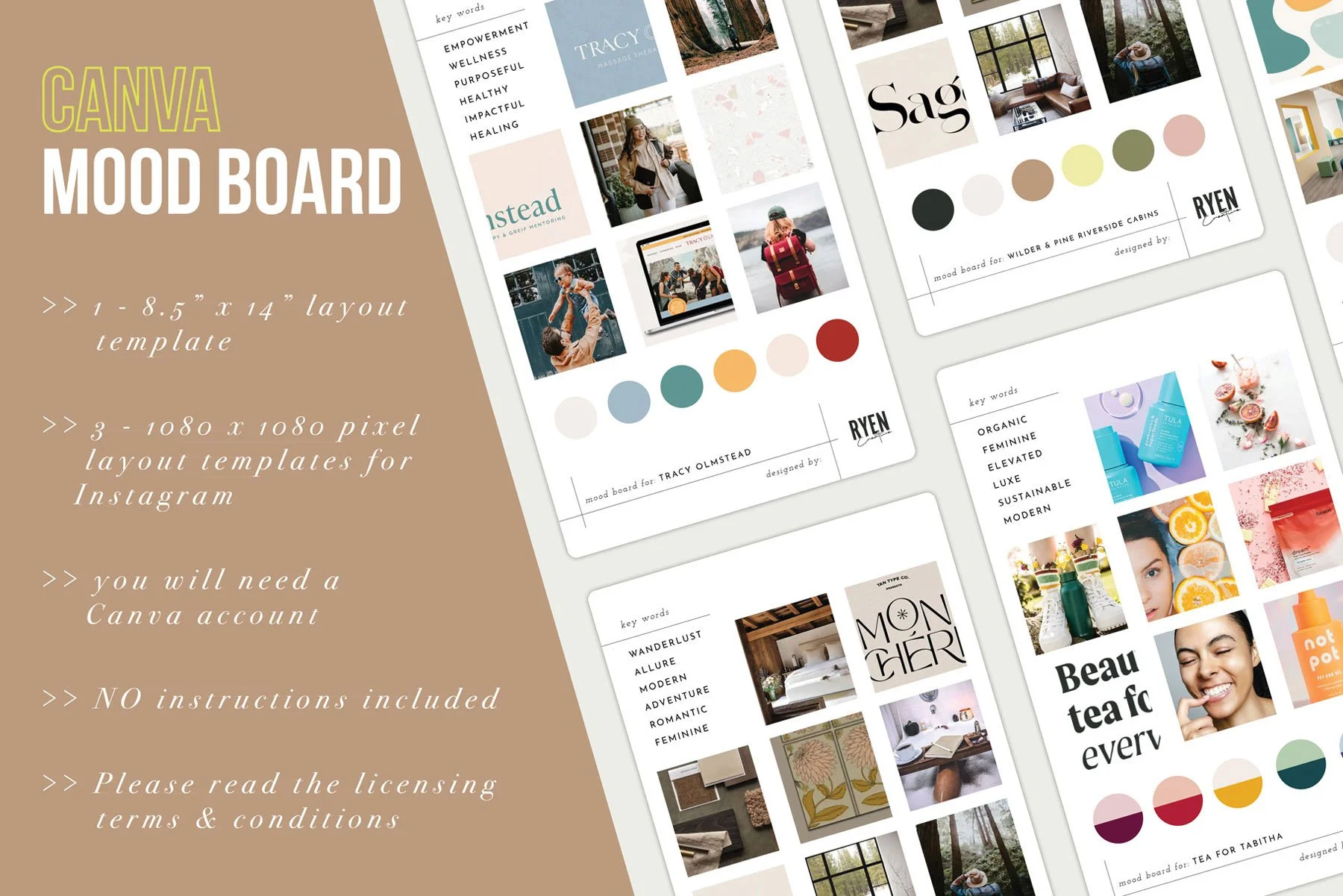
A mood board is a collection of visuals — think colors, fonts, textures, photography, design elements — that capture the overall mood or direction you want for your brand.
It’s not just about what looks “cute.” It’s about curating visuals that set the tone for your brand identity. Is your vibe minimal and modern? Bold and playful? Cozy and earthy? Your mood board tells that story at a glance.
And bonus: it makes decisions so much easier down the line. Choosing fonts, photos, or even what type of Instagram graphics to create suddenly becomes a no-brainer because you’ve already set your brand’s visual compass.
👉 Side note: If you’re thinking “okay cool, but where do I even start?” … don’t stress. I’ve got a Mood Board Canva Template that makes this process ridiculously easy. Just drop in your inspo images and colors and watch your brand vibe come together.
What a Mood Board is Not
This is just as important as knowing what a mood board is. Let’s clear a few things up:
It’s not just a bunch of Pinterest images. Pinterest is amazing for inspiration, but remember — a lot of what you see there has already been done… a LOT. Your mood board should be curated to reflect your unique brand vibe, not just a copy-paste of someone else’s.
It’s not a brand. A mood board helps guide your brand visuals, but it doesn’t replace branding. Colors, fonts, and imagery alone don’t make up a full brand identity. (That’s where my Branding services come in 😉).
It’s not a strategy. A pretty collection of images won’t tell you how to connect with your audience, what your messaging should sound like, or how to sell your offer. That’s where the deeper work of brand strategy comes in.
In other words: a mood board is a starting point, not the whole journey.
Why You Need a Mood Board for Your Business
Here’s why I think every business owner (yes, even you) should have one:
Clarity — It helps you stop second-guessing design choices. Everything you create should tie back to your board.
Consistency — A consistent look builds trust. Your mood board keeps your website, socials, and marketing on the same page (literally).
Collaboration — If you ever work with a designer, photographer, or social media manager, your mood board becomes your visual cheat sheet.
Inspiration — On days when you’re feeling creatively stuck, your mood board gives you a spark of direction.
How to Make a Mood Board (Step-by-Step)
Step 1: Collect your inspo
Pinterest, Instagram saves, magazine cutouts, screenshots — grab whatever speaks to your brand vibe.
Step 2: Look for themes
Lay everything out and ask yourself: what colors, textures, or styles keep popping up? What feels like “me” or “my brand”?
Step 3: Curate, don’t clutter
A mood board isn’t supposed to be 500 pictures crammed together. Edit ruthlessly. Aim for 8–12 strong visuals that really tell the story.
Step 4: Add in brand elements
Drop in potential fonts, logos, or color swatches. This is where you start bridging inspiration with actual branding.
Step 5: Build it in one place
Sure, you can cut and paste onto a poster board like it’s 2005… or you can make your life easier and build it digitally. Canva is my go-to because it’s drag-and-drop simple, and you can easily update it as your brand evolves.
👉 This is literally why I created my Mood Board Canva Template. It gives you a polished framework so you’re not just staring at a blank canvas wondering where the heck to put things.
Mood Board Mistakes to Avoid
Because you know I can’t just tell you what to do without also telling you what NOT to do:
Too many colors: Keep your palette focused (3–5 main colors max).
Trend chasing: Choose what actually fits your brand, not just what’s trendy this week.
Overstuffing: Less is more. A mood board should feel intentional, not like a collage of everything you’ve ever liked.
Ready to Create Yours?
Whether you’re building a new brand or refreshing your current one, a mood board is one of the best first steps you can take. It’ll give you clarity, confidence, and consistency in your visuals.
And because I know staring at a blank screen is the worst, I made it easy for you: grab my Mood Board Canva Template and get started today.
Your brand deserves more than a Pinterest board full of scattered vibes. Let’s turn your inspiration into a cohesive visual story.
👉 Want to go beyond just pretty visuals? Check out my Brand & Strategy Services. That’s where the real transformation happens.